Tag Archives: community

What Kind of Online Community Do You Have Behind Your Firewall?

January 23, 2012

2 Comments

As CIOs and Chief Knowledge Officers bring tools that have been used on the Internet – blogs, wikis, microblogs, profiles – behind the firewall, they tend to expect the same results. "We'll have our own Wikipedia!" Or Facebook…or Twitter – you name it. Unfortunately, as many have already discovered and many more will continue to discover, successful communities are dependent on many variables, from the accessibility, speed, and reliability of the technology to your community managers. Despite the newsletter articles, blog posts, press releases, and conference presentations, many "communities" are nothing more than a new version of the same old Intranet, only with shinier tools.

So, if you're deploying social tools internally, what kind of community is your organization creating?

  • What group/community receives the most visits and/or posts on a particular day?
    1. The Intranet development team
    2. The Social Media/Web 2.0/New Media Community of Practice
    3. The Android/iPhone User Group
    4. An group focused on the core mission/operations
  • On any given day, what % of your organization participates (reading or contributing) in your community?
    • Less than 10%
    • 10% to 49%
    • 50%-74%
    • More than 75%
  • Senior leadership participation can best be classified as:
    1. Shhh! Don't tell them or they'll shut this site down!
    2. Big Brother-ish
    3. Lurking, but not active
    4. Active and insightful
  • If someone posts, "I can't get my email to work on my phone – help!" What kind of response will they get?
    1. Total Silence
    2. "Call the help desk at 1-800-555-5555"
    3. "What problem are you having – maybe I can help?"
    4. "Many people have had issues with this so we created a wiki page to walk you through how to set it up the right way"
  • Your CEO announces large-scale layoffs. You visit your online community later that day – what do you find?
    1. "I'm not going near that one!"
    2. Complaints and criticism
    3. Praise for leadership and the difficult job they have to do
    4. Balanced, professional discussion containing constructive criticism, ideas, and empathy
  • Most of your employee profile pictures look like:
  • Someone publishes a blog post highly critical of a senior leadership decision – what's the reaction?
    1. Trick question – all posts have to be approved by management and that never would have made it through
    2. The administrators delete the post and send a note to the employee's manager
    3. Other employees leave comments recommending that the post may be unprofessional and warrant some editing
    4. The senior leader in question posts a comment himself thanking the employee for his feedback and explaining the rationale behind the decision
  • You create a wiki page for your team containing the text of a report you're working on. What kind of edits can they expect to receive?
    1. Yours and yours alone, since no one else your team understands how to make the edits themselves
    2. Your project team's edits because no one else can access the page
    3. No edits, but you do receive several comments and questions on the page
    4. A wide variety of edits ranging from minor to major and coming from your team as well as from people you don't know
  • Your boss asks to review the latest version of a document you've been working on. You sent her the link to the wiki page where it's stored. What's her response?

    1. Can you attach the file and send it to me?
    2. I couldn't figure out how to make any changes so I've just included them in the attached MS Word file
    3. She makes her edits as comments to the page
    4. She edits the page directly
  • The conversations that occur within your community most resemble:
    1. An empty room
    2. A board meeting
    3. Happy hour
    4. The hallways at the office
  • It's Friday night and you just discovered that you have a TPS report due first thing Monday morning. To do it, you need some examples of similar reports that have been produced by other teams. Where do you head first?

    1. You email your immediate team
    2. You send a blast email out to multiple distro lists asking for help. After all, at least one or two people have to respond, right?
    3. You search your Intranet with every keyword you can imagine
    4. You search the TPS forum and post your request there

Do you have a better idea of what kind of community you're building? Healthy communities aren't just about collecting users – they're about interactivity, a positive atmosphere, usefulness and more. Why do you log into Facebook every day? Not to play with all of the cool features, but to interact with your friends and family. Internal communities should have some of these same qualities – they need to have a purpose and be based around human interactions, not the latest technology.

If your score was 16 or less, you don't have a community, you've got the man cave of a new dad. The place is filled with the latest technical toys but no one is around to use them. From the Xbox to the pool table to the fully-stocked bar, you had envisioned many nights partying with the boys watching football, but now that you have a new baby, the only thing all those toys are doing is collecting dust…just like your blogs, wiki pages, and profiles.


If your score was between 17 – 24, your community most resembles China. You've got a lot of users (primarily because people are forced to create profiles), but very little sense of community. People talk with one another because they have to, and only when they need something. Conversations are guarded and transactional, and information is protected even more closely as trust between individuals is lacking. Non-work conversations are prohibited – none of that "social networking" stuff here!


If your score was between 25 – 33, your community is most like a high school full of people still trying to figure out who they are, who their friends are, and how to communicate with each other. The adults are confused by the kids, the kids are kind of wary of the adults, but they all co-exist fairly peacefully. Diverse cliques form early and often – iPhone enthusiasts, social media geeks, developers – all with different goals and reasons for being. A few individuals stand out and connect these cliques across the entire school. Social conversation occurs, but is often forced, as people are trying to fit in and test the boundaries of what is allowed and what isn't.
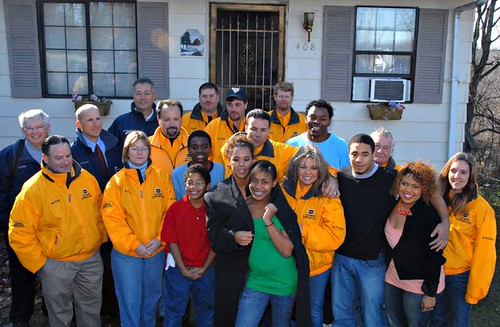
 

If your score was between 34 – 44, congratulations! You've got the makings of honest-to-goodness social business community. People willingly share information freely across geographic, administrative and cultural lines not because they have to, but because they realize that by pitching in and helping, everyone benefits. Conversations run the gamut – some days, they're about LOLCats, but on other days, they're focused on how to best create a culture of innovation. They are overwhelmingly professional in nature, but the content is also overwhelmingly informal. People are only vaguely aware of the number of abbreviations following someone's name and the titles that precede it, but hold the value an individual brings to the rest of the community in high regard. Employees willingly (and often) spend their own time and money to improve the community, whether via handing out awards or creating new features. And most importantly, this sense of community exists both online and off. From the conference room in the morning to my couch late at night, I know I'm not just an employee number, I'm a valued member of a community that depends on me.

I took this test for my own company's social Intranet tools, and I discovered that we're most like a high school. We still only have a fraction of the firm using the tools on a regular basis and the relationships between staff, management, and senior leadership are in that awkward stage where we're all still trying to figure out how to talk with one another.

(note: this isn't meant to be used as some formal "diagnostic" or "roadmap" or anything of the like so please take it for what it is – a fun way to gauge how well your community is actually acting like, you know, a community)

Continue reading...

If You Want a Culture of Collaboration, You Need to Accept the LOLCats Too

January 5, 2012

2 Comments

"Even with the sacred printing press, we got erotic novels 150 years before we got scientific journals."

- Clay Shirky at TED Cannes in June 2010

This is one of my favorite quotes from one of my favorite people in the business, Clay Shirky. I particularly like it because it illustrates the period many organizations find themselves in when trying to integrate social media internally.  Before wikis were used by the Intelligence Community to develop reports on IEDs, people were creating user badges to show off their favorite NFL teams. Before my own company's Intranet won any awards, we had people talking about how they enjoy skinny dipping on their profile. Before our VPs starting using Yammer to communicate with the workforce, we had groups of Android geeks and fitness gurus.I'm telling you this because if you're implementing any type of social media behind your organizational firewall, you should prepare yourself, your colleagues, your bosses, your senior leadership for this one inexorable truth.

If you will freak out when you see this on your Intranet, you're probably not ready for a social intranet

If you will freak out when you see this on your Intranet, you're probably not ready for a social intranet

If you want to create a vibrant culture of collaboration, you need to be OK with pictures of LOLCats, posts about the NFL playoffs, arguments about Apple and Android, and criticism of company policies.

Accept and embrace this fact now and your communities have a much better chance at succeeding. Or, continue thinking that things like this are a waste of a time and are unprofessional, and get ready to pay a lot of money for a system that ultimately no one uses unless they absolutely have to.

Unfortunately, "social" seems to have become almost a dirty word in the workplace, conjuring up images of employees whittling away their time on Facebook, talking to their boyfriend on the phone, or taking a three hour lunch break.  Let's all agree now to stop trying to take the social out of social media. "Social" interactions not only needs to be OK, they need to be encouraged and rewarded. Shirky explains why at the 5:33 mark of the below TED video:


Shirky says:

The gap is between doing anything and doing nothing. And someone who makes a LOLcat has already crossed over that gap. Now it’s tempting to want to get the Ushahidis without the LOLcats, right, to get the serious stuff without the throwaway stuff. But media abundance never works that way. Freedom to experiment means freedom to experiment with anything.

The same principle holds true when talking about social media and the business world. There's this tendency on the part of senior leadership to want to skip the blogs about company policy workarounds and the wiki pages detailing where to get the best burritos near the office and move right to co-creating methodologies with cross-functional teams and crowdsourcing initiatives that save millions of dollars. It doesn't work like that. Collaborative communities don't just start innovating because you build a website and send a memo. Just like we had to experience erotic novels before scientific journals and LOLCats before sites like Ushahidi, we will also have to accept the fact that your employees will be talking about fantasy football and what they're doing over the holidays before they're going to be ready to use those tools to conduct "real" work. 

This makes intuitive sense though, doesn't it? Isn't posting about fantasy football or your favorite lunch spot a lot easier (and less frightening) than uploading that report you've been working on for three weeks? If someone doesn't like your favorite restaurant, who cares? If, however, someone criticizes the report you've spent weeks writing, that's a little more intimidating.  Once you've taken that step – that step from doing nothing to doing something - it's a lot easier to take the next step and the step after that. After engaging in that conversation about your favorite burrito, it's suddenly easier to join the conversation about the new IT policy. Then, maybe you upload a portion of the report you're struggling with to see if anyone can help. Viewed from this perspective, even the stupidest posts and most worthless conversations have value, because they provide a safe, low risk means for people to dip their toe in the water and take that first step. 

It takes time for employees to feel comfortable using these social tools at work. If you give them the ability to grow and learn together at their own pace, your community will become much more scalable and sustainable.

It takes time for employees to feel comfortable using these social tools at work. If you give them the ability to grow and learn together at their own pace, your community will become much more scalable and sustainable.

So embrace the LOLCats, the fantasy football threads, the lunch discussions, and the custom avatars – at least your employees will be creating and sharing something with someone else. Because what will follow is that these stupid, silly, foolish discussions will lead to relationships, questions, answers, and finally, very cool innovations, products, and solutions that will save you money, win you awards, and really and truly create a social business.

Continue reading...

A Community of Practice Is More Than a Website

November 1, 2011

1 Comment

A community of practice (CoP) is, according to cognitive anthropologists Jean Lave and Etienne Wenger, a group of people who share an interest, a craft, and/or a profession.

Over the last year or so, the term communities of practice has entered the social media buzzword lexicon along with virtual collaboration, engagement, platforms, and Enterprise 2.0. Senior leaders want to establish them, new employees are being told to join them, and middle managers are being told to support them, but what, exactly are they?

Nowhere in the definition above does it mention the words website, wiki, blog, or social network. Nowhere does it say that it has to be virtual or physical or even either/or. There is no reference to the tools that are used to facilitate the communication and collaboration, nor is there a defined set of characteristics that define how a community of practice works or what topics they discuss.

A group of people who share an interest, a craft and/or a profession. Sounds pretty simple, right? Sounds like we might already be members of dozens of communities of practice – at work, at church, at school, etc. It’s just a group of people communicating and collaborating openly around a topic that they all care about. CoPs have existed for as long as people have had a desire to learn from each other.

Whether your organization knows it or not, your company/government agency is already filled with CoPs. Just because all of their communication and collaboration doesn’t happen to occur on your designated SharePoint site doesn’t mean that people aren’t already communicating and collaborating around a shared topic of interest. Whether it’s the group of new hires who coordinate the monthly happy hours or the new parents who get together over lunch to discuss work/life balance, communities of practice are alive and well within most organizations. They just might not be the ones with a unique URL on the Intranet.

Are you creating a community of practice or are you just creating another website? How does your CoP stack up to some of these statements?

  • People voluntarily spend time helping others in a community of practice. People visit a website to download what they need.
  • CoPs focus on adding value to their members. Websites focus on getting new users.
  • The success of a CoP is measured in anecdotes, efficiencies, and employee satisfaction. The success of a website is measured by hits, visits, and referrals.
  • The members of a CoP volunteer their expertise to create new tech features. A website has paid developers who add new features.
  • A CoP is built around conversation. A website is built around content.

Communities of practice have been around for decades, and for decades, they’ve helped countless organizations navigate major changes, increase productivity, cut duplication, and make work more enjoyable. In many cases, the use of social media has enhanced these CoPs by providing more tools and opportunities for people to connect with other people. Unfortunately, social media has also given rise to zombie communities filled with content on blogs, forums, and wikis, but which lack any actual human interaction. What are you building?

For more about Communities of Practice, check out Cultivating Communities of Practice: A Guide to Managing Knowledge, Harvard Business School Press, 2002 by Etienne Wenger, Richard McDermott, and William M. Snyder.

Continue reading...

Just Because You Run the Same Plays Doesn’t Mean You’ll Get the Same Results

March 23, 2011

7 Comments

The Packers dominated teams using the Lombardi Sweep, but few teams had the talent to run it as effectively

“That’s easy – even I could do that!”

Really?  Could you?  How many times have you been watching a game and said that about that highlight catch that you saw on Sportscenter?  How many times have you watched Tiger Woods swing a golf club and then try to recreate that yourself? How many times have you yelled at your favorite team to just run that one play because you just know it’ll work?

Guess what – you wouldn’t have made that catch, you can’t golf like Tiger, and your play calling leaves a lot to be desired.

This same thinking unfortunately, also carries over to the business world. Over the course of eight years in the consulting industry, I’ve noticed an increasing number of colleagues, peers, and clients thinking that just because they read/downloaded/heard a white paper, strategy, or presentation, (a play, a swing, or a catch) they too can go out and be a communications or social media expert too. Or, they ask for the detailed step-by-step guide for “using Twitter/Facebook/blogs successfully.” Like the weekend golfer who tries to be Tiger Woods or the YMCA rec league player trying to dunk, the results are similarly predictable. You downloaded that community management strategy that I did for a client two years ago and you’re now using it with your team in a totally different environment with a totally different culture? How’s that working out for you?

In the 1960s, the Green Bay Packers repeatedly ran the “Lombardi Sweep” with great success. With Vince Lombardi coaching and Hall of Famers Bart Starr, Paul Hornung, Jim Taylor, and Jerry Kramer running the play, it became virtually unstoppable. Seeing this success, other teams started to incorporate the play into their playbooks although none were able to duplicate the success the Packers had with it. Running the Lombardi Sweep with four Hall-of-Famers had predictably different results than when you’re running it with a bunch of guys off the street! The actual play wasn’t some proprietary, secret play – it’s actually a pretty simple play to run that many teams already had in their playbook. Despite the widespread availability of the play and game tapes of the play being run to perfection, no one was ever able to consistently duplicate the results that those Packer teams had. Because they had one thing the other teams didn’t – Hall of Fame talent running the play.

The current world of social media isn’t all that different. All it takes is a simple Google search and you’ll easily find millions of blog posts, white papers, presentations, and case studies on social media best practices. You too can use the same tactics used by Zappo’s! You can create an Enterprise Social Computing Strategy just like Intel!  Unfortunately, just like your repeated attempts to dunk like Blake Griffin, your ability to emulate the successes by these companies will likely leave you frustrated and in pain. Do you have the talent to implement something like that? Do you have the right people on staff to help you?

Remember this the next time you read a white paper or listen to a presentation about social media or community management and think to yourself, “hey, I could do that!” There’s a reason people recruit, hire, and pay experienced community managers and social media specialists to do these things – because these things are hard to do. Stop looking for the quick fix, magic bullet strategy/play/framework/model/methodology/secret sauce to social media – it doesn’t exist. Instead of trying to copy another team’s success, focus on recruiting, hiring, and developing your own talent and matching up your strategies to fit. After all, you may never dunk like Blake Griffin, but you might be able to shoot the three better than him.

Continue reading...